La Place Crèvecœur
 See more images
La Place Crèvecœur
Place Crèvecoeur - 62100 CALAIS
St. Peter's Church
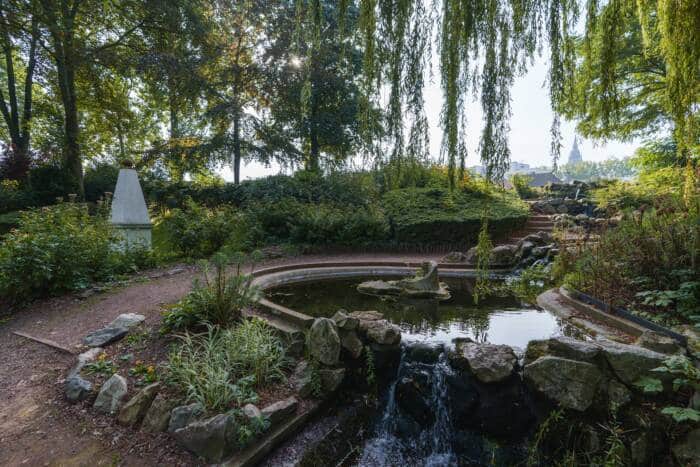
Place Crèvecoeur was the heart of Saint-Pierre, the center of the lace industry. This led to the town's westward expansion… and a need for land. Jean-Louis Crèvecoeur, a prominent local figure, owned farmland there. He donated it to the town in 1836 for use as a fairground and market site. The Crèvecoeur family donated another 2 hectares in 1854. The condition was that buildings be constructed to serve the community, hence the construction of the three main buildings in the mid-3th century.
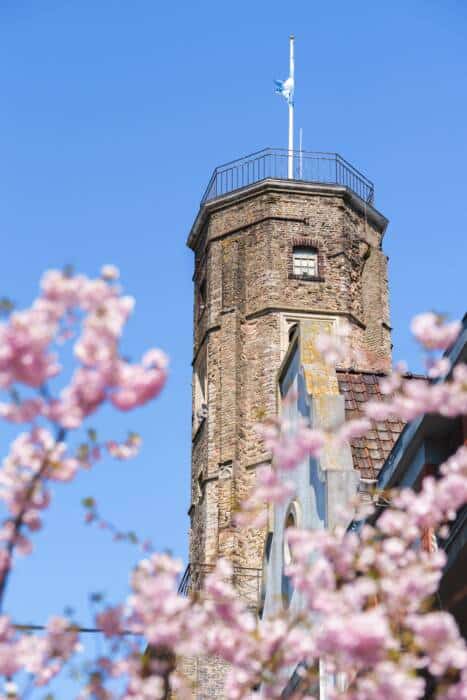
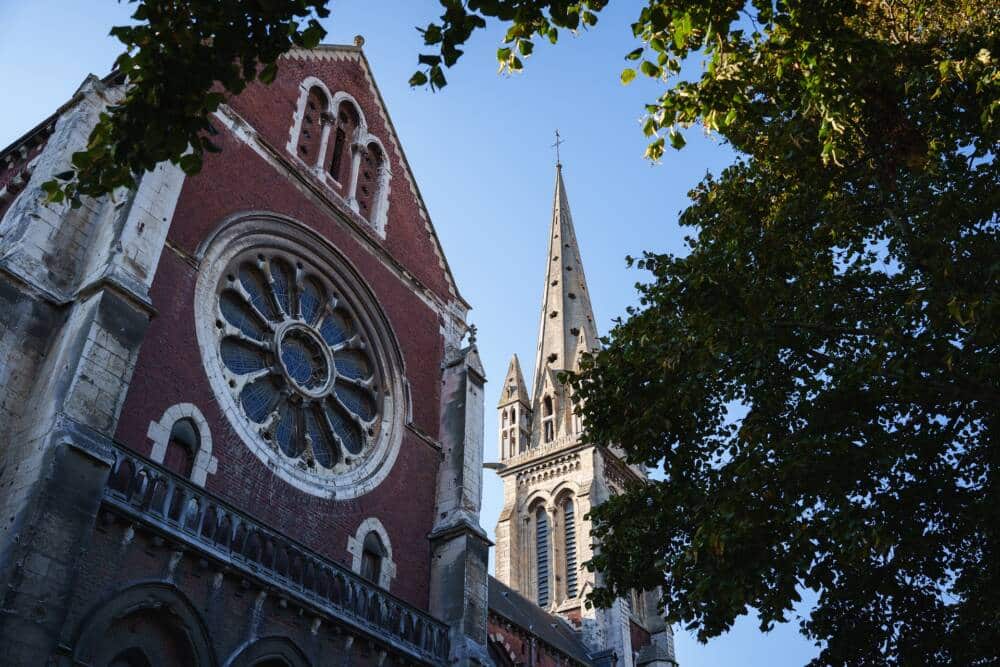
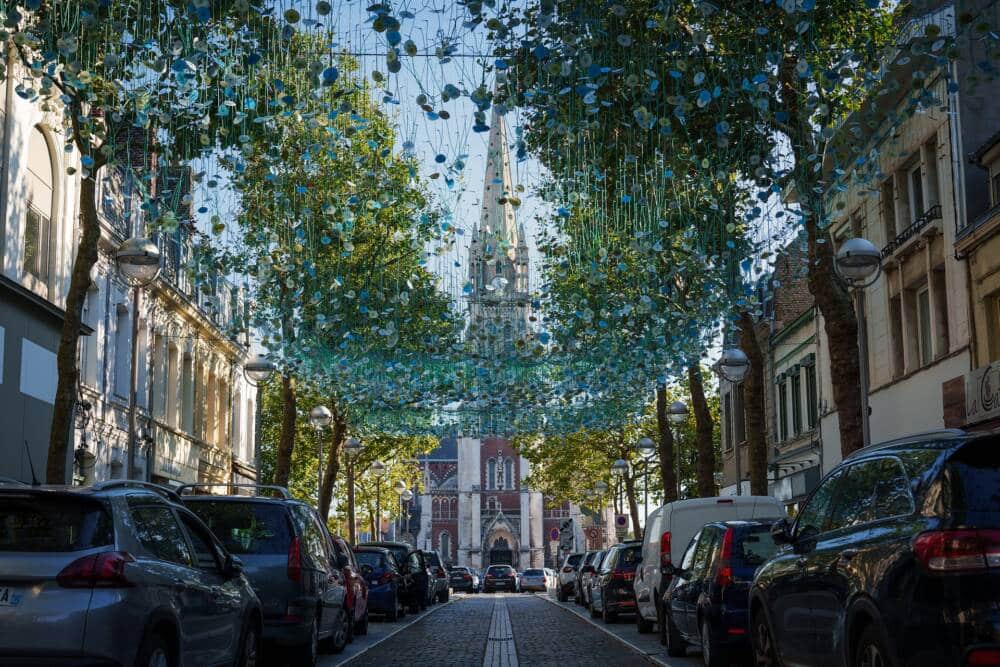
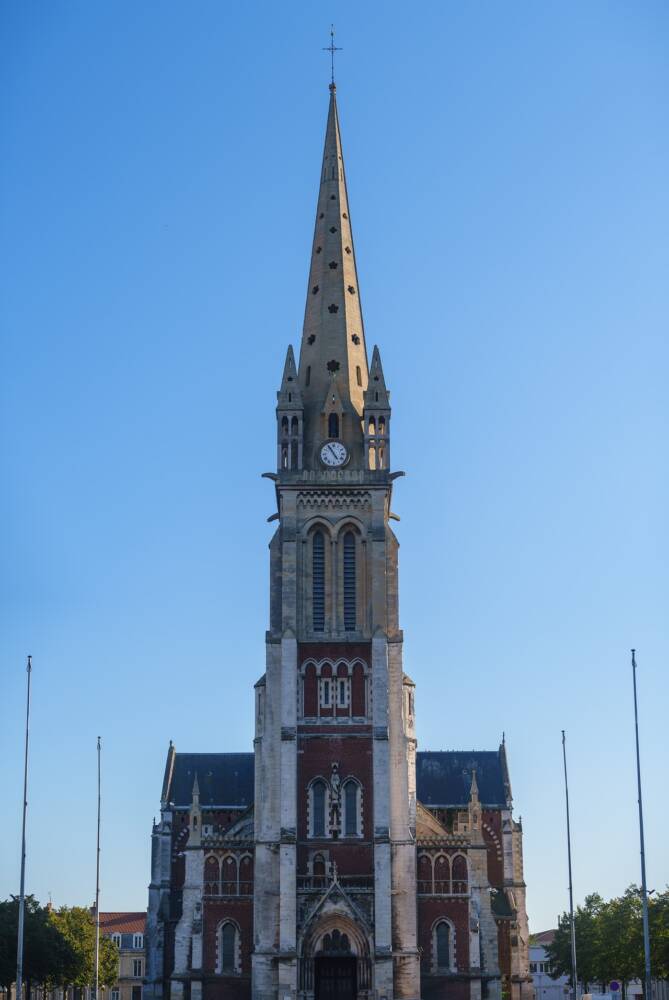
The church of Saint-Pierre was too small for a population that was exploding. In 1862, Mayor Henri Leblond decided to build a new square on the square. The architect was Emile Boeswillwald, a student of Eugène Viollet-le-Duc. The style is neo-Gothic, with a slender bell tower reminiscent of Breton churches. The main place of Catholic worship in Calais today, Saint-Pierre has a certain cachet inside, notably its Gothic pulpit, its transept and a chapel dedicated to the Virgin.
 ©nohcab
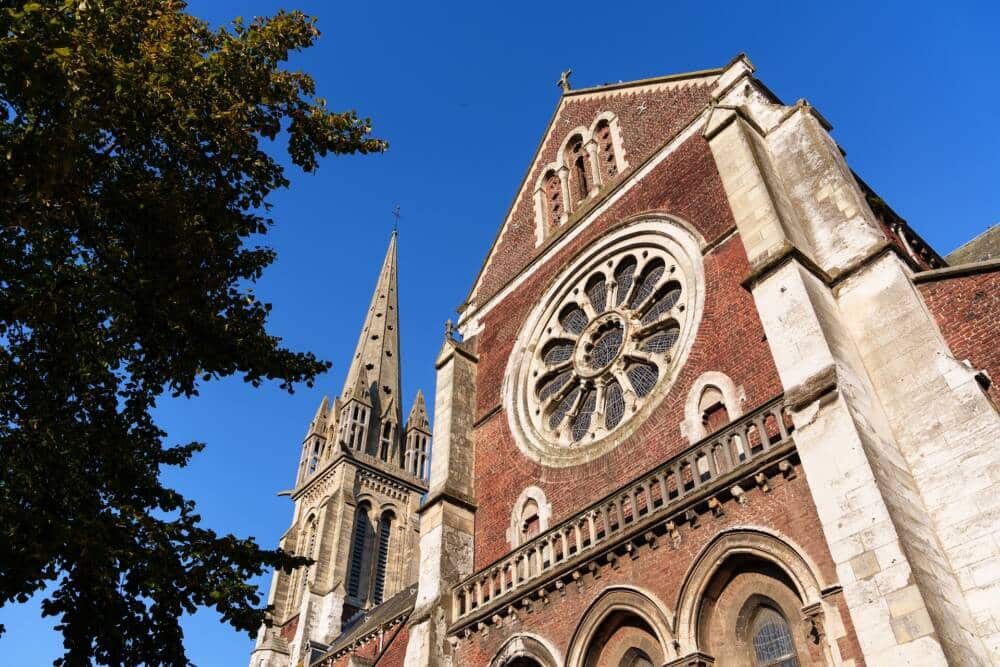 ©Nohcab
Street art takes over the ceilings of the church's vestibule.
An extremely rare canvas for a work of street art: the vault of a church narthex. The Saint-Pierre parish entrusted Amaury Dubois with this unique interior space: the narthex, the church's entrance vestibule, a place of transition between the outside and the sacred.
Proof that the dialogue between street art and the sacred is not a contradiction, it is a continuity.

The Lacemaker Virgin, a sculpted memory of Calais lacemaking
Created in 1955 by the Calais sculptor Léon Canler, the Lace-Making Virgin is an emblematic work of local heritage. Commissioned by Canon Deseille, Archpriest of Calais for the Church of Saint-Pierre, it pays homage to the lace-making industry that shaped the history of the district.
Moved to the Little Sisters of the Poor, it was considered lost after the demolition of their building on the Quai de l'Yser. The statue was rediscovered in 2024 thanks to the Calais Photos Nostalgie association. The necessary steps for its restoration have been initiated.
This 850-kilogram work in Marquise stone depicts the Virgin Mary surrounded by symbols of the lace-making trade. It embodies faith, work, and the memory of the working class. It has been returned to its place in the Church of Saint-Pierre, in the heart of the district where lace was the lifeblood of Calais.
 ©Wendy Wasielewski
The District Court
Formerly the town hall of Saint-Pierre-lès-Calais
To the left of Saint-Pierre Church, the neoclassical style of the 'Palace of Justice' stands out. When it was built in 1858, this building served as the new Town Hall of Saint-Pierre-lès-Calais. In 1885, Saint-Pierre and Calais merge and became present-day Calais. Municipal services remained there until the town hall and its belfry were opened in 1920. The now-vacant town hall housed the judicial and police services for several decades. Today it is the local court.
Following the trail of the 1885 merger ©Nohcab
 ©Nohcab
The Labor Exchange
The Bourse du Travail (Labor Exchange) is to the right of Saint-Pierre Church. This distinctive cubic structure was built between 1937 and 1939 according to the plans of architect Roger Poyé, whose style can easily be seen throughout the streets of Calais. The building still maintains a connection with the world of work, as it houses the trade unions. It also serves as a covered market, open on Thursday and Saturday mornings.
Originally, in 1860, a washhouse and shower building was constructed in a neoclassical style, similar to the Saint-Pierre Town Hall opposite. Later, the building housed various schools (drawing, music) before its destruction during the First World War. About fifteen years later, the labor exchange was built on the same site.
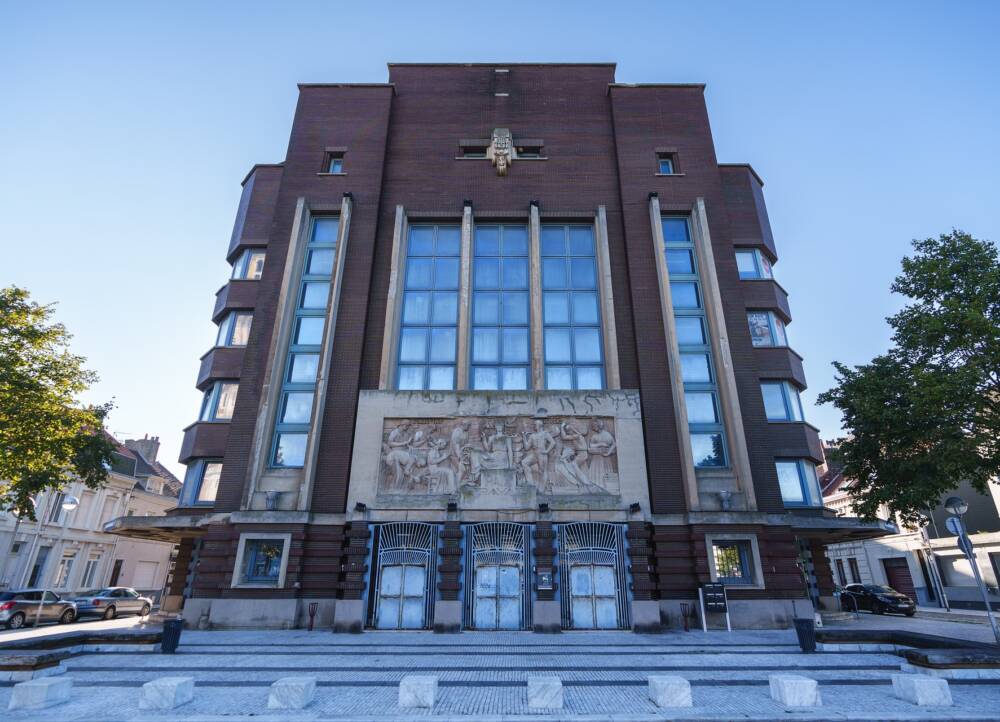 ©Nohcab
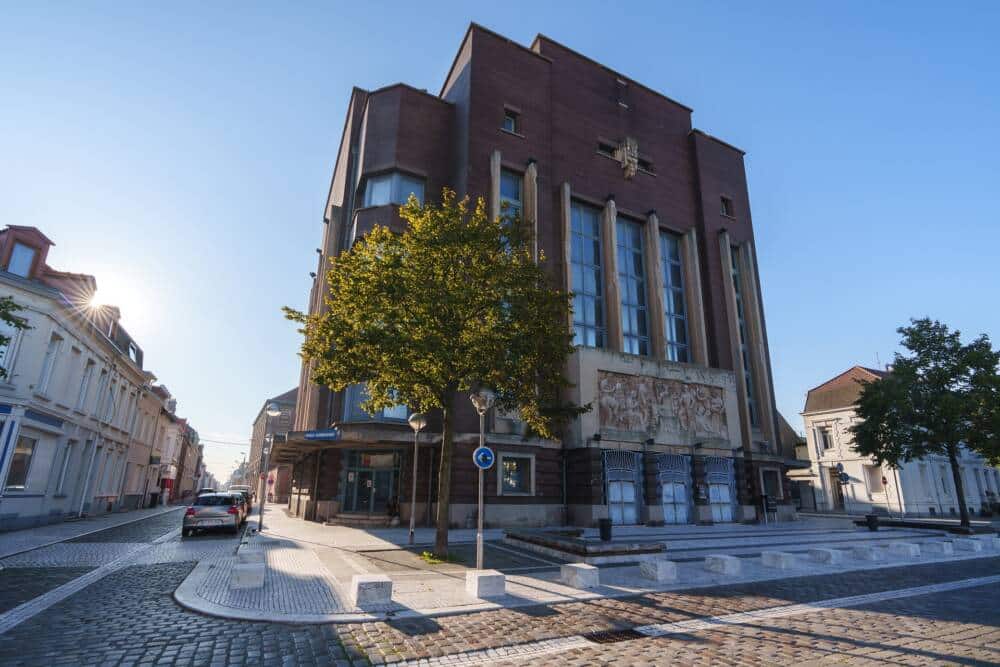 ©Nohcab
Among the 10 most beautiful Art Deco buildings in the world
The bas-relief on the façade is a tribute to the main trades of the time in Calais. With its geometric lines and meticulous details, the mural perfectly illustrates the alliance between art and social commitment, characteristic of Art Deco in Calais. A true testament to the city's working-class identity, it is an essential stop for discovering the history and architecture of Calais. The façade has been ranked among the 10 most beautiful Art Deco buildings in the world by Art Deco Magazine.
Art Deco in Calais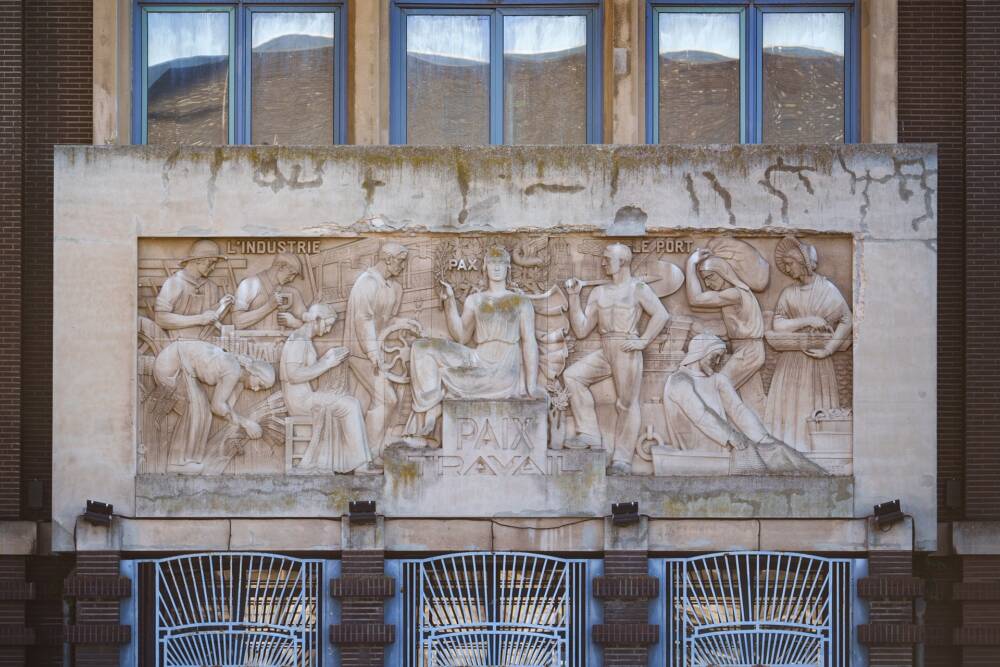 ©Nohcab
Life in Crèvecoeur Square
Crèvecoeur Square, Saint-Pierre Church and the District Court (Palais de Justice) also witness rich and varied events every year, such as during the end-of-year period when a fireworks display is set off there for the enjoyment of families; it is also the starting point for the grand Christmas parade.
It is also traditionally a marketplace, sometimes with the surprise of seeing the Travel Monitor Lizard visiting the neighborhood.
Follow the events calendar ©Nohcab
 ©Timothé Lovergne